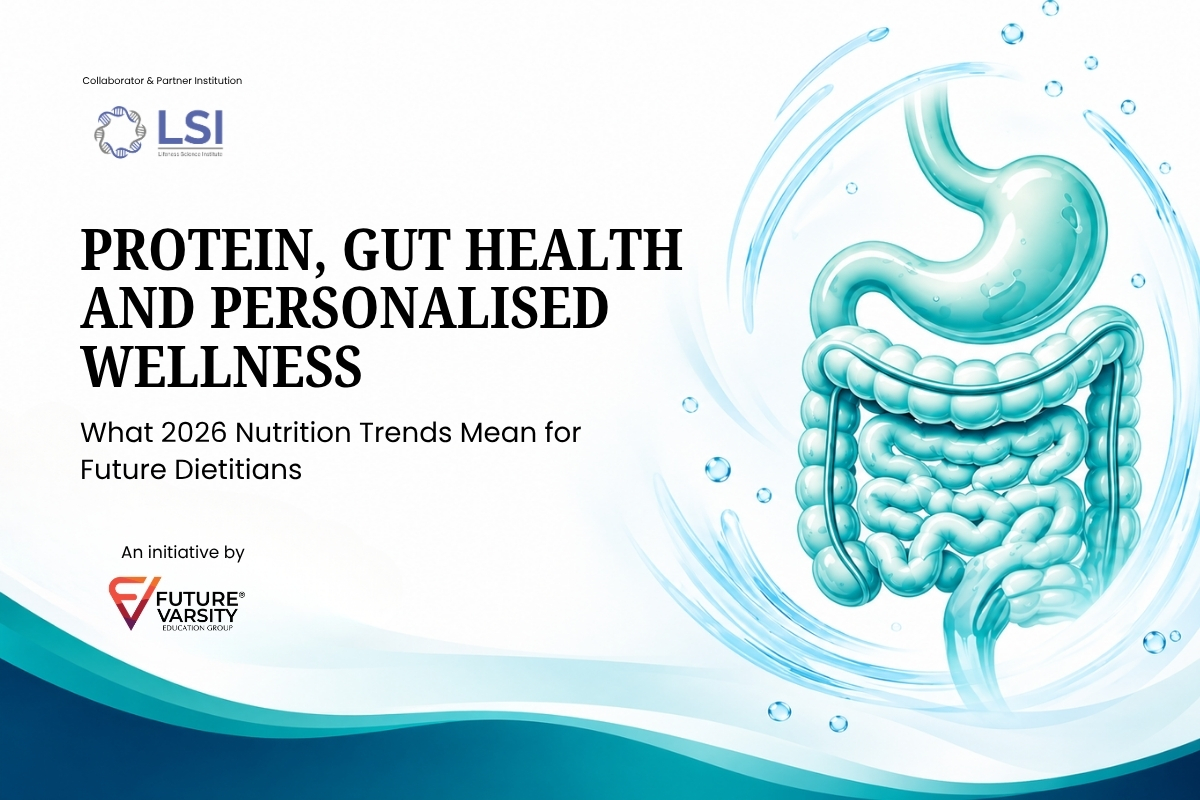
Walk through a supermarket or scroll through wellness content in 2026, and three themes appear repeatedly: protein, gut health and personalised wellness.
For consumers, these may appear as the latest food and wellness trends. For future dietitians and nutrition professionals, however, they represent something more important: an opportunity to understand how nutrition science, consumer behaviour, technology and marketing interact.
As nutrition continues to become part of everyday conversations about health and wellbeing, professionals need more than knowledge of food and nutrients. They need the ability to evaluate evidence, understand individual needs and communicate nutrition information responsibly.
Protein Is Becoming a Mainstream Nutrition Conversation
Protein has moved beyond traditional fitness and bodybuilding conversations. It is increasingly visible across snacks, dairy products, breakfast foods, beverages and convenient food products.
For consumers, the growing availability of protein-focused products can make healthy choices appear simpler. For nutrition professionals, however, the conversation needs to go beyond the number printed on a package.
A dietitian or nutrition professional needs to consider the overall dietary pattern, individual nutritional requirements, food quality, lifestyle, preferences and sustainability.
This makes protein an excellent example of why nutrition education matters. A product being marketed as “high protein” does not automatically make it appropriate for every individual.
What Future Dietitians Can Learn
Students can develop the ability to:
- Understand individual protein requirements
- Evaluate nutrition labels and product claims
- Consider protein sources within the overall diet
- Communicate nutrition information without oversimplification
- Understand the relationship between nutrition, lifestyle and health goals
The lesson is simple: a nutrition trend should be evaluated in context rather than followed automatically.
Gut Health Needs Careful Communication
Gut health has become one of the most visible topics in modern wellness conversations.
Fermented foods, probiotics, prebiotics and the gut microbiome are now widely discussed by consumers, wellness brands and content creators. Research into the gut microbiome continues to develop, making this an important area for nutrition education.
At the same time, the popularity of gut-health content creates a communication challenge.
Not every digestive concern requires the same approach, and emerging research should not automatically be presented as established clinical guidance.
Future nutrition professionals need to understand the difference between promising research, established evidence and exaggerated wellness claims.
Why This Matters for Future Nutrition Professionals
Students who understand evidence-based nutrition can learn to:
- Assess the quality of nutrition information
- Understand the fundamentals of gut health
- Evaluate claims surrounding probiotics and prebiotics
- Communicate scientific information responsibly
- Avoid unnecessary or overly generalised nutrition recommendations
As gut health continues to attract consumer interest, the ability to communicate what science actually says will become increasingly valuable.
Personalised Nutrition Is Growing
Another important development in nutrition is the growing expectation for personalised advice.
Consumers increasingly want recommendations that reflect their lifestyle, food preferences, culture, budget, health goals and everyday routines.
Technology can support this process by helping collect and organise information. However, technology does not replace professional judgement.
Personalised nutrition should not necessarily mean creating increasingly complicated plans. Instead, it should mean making nutrition guidance relevant, realistic and appropriate to the individual.
For future dietitians, this requires an understanding of both nutrition science and human behaviour.
Nutrition Trends 2026 India: Why Context Matters
Nutrition trends do not develop in isolation. They are influenced by changing consumer preferences, social media, food products, health awareness and lifestyle patterns.
In India, nutrition professionals also need to consider factors such as:
- Regional food habits
- Cultural dietary practices
- Affordability and accessibility
- Vegetarian and non-vegetarian dietary patterns
- Family eating habits
- Urban lifestyles
- Changing food consumption patterns
This makes nutrition education particularly important. A recommendation that works for one individual or population may not necessarily be appropriate for another.
Trend Literacy Is a Professional Skill
For future dietitians, understanding nutrition trends should not mean following every new wellness movement.
Instead, trend literacy can become a professional skill.
Students can learn to analyse:
- Viral nutrition claims
- Food and supplement marketing
- Nutrition labels
- Social-media wellness content
- Emerging research
- Consumer behaviour
- The difference between correlation and evidence
One useful academic exercise is to select a viral nutrition claim and create an evidence-based consumer explainer.
This encourages students to move beyond simply asking, “Is this trend popular?” and instead ask, “What does the evidence actually tell us?”
The Growing Role of Communication in Nutrition
The modern nutrition professional is also a communicator.
Whether working with clients, athletes, organisations, communities or digital audiences, professionals need to explain scientific concepts in language that people can understand.
This means developing skills such as:
- Nutrition counselling
- Consumer education
- Scientific communication
- Critical thinking
- Digital content communication
- Behaviour-change communication
- Ethical decision-making
As nutrition information becomes increasingly accessible online, professionals who can communicate accurately, clearly and empathetically can play an important role in improving nutrition literacy.
Why Integrative Nutrition Education Fits This Moment
Modern conversations around wellbeing increasingly connect food with other aspects of lifestyle, including sleep, stress, movement and behaviour.
This broader perspective is relevant to integrative nutrition, which considers nutrition within the wider lifestyle context while keeping scientific understanding at its core.
FV-LSI (Lifeness Science Institute) focuses on Integrative Nutrition and Dietetics, giving students an opportunity to explore nutrition through both scientific and holistic perspectives.
For students preparing for careers in nutrition, dietetics and wellness, this approach can help them understand that professional nutrition practice is not simply about knowing which foods contain which nutrients. It also involves understanding people, behaviours, lifestyles and the context in which food choices are made.
What These Trends Mean for Future Dietitians
Protein, gut health and personalised nutrition may continue to evolve as consumer interests change. New trends will emerge, products will be reformulated and social-media conversations will move on.
The more durable skill is the ability to evaluate, interpret and communicate nutrition information.
Future dietitians can prepare for this changing environment by developing:
Scientific knowledge – to understand nutrition research and evidence.
Critical thinking – to distinguish credible information from marketing and misinformation.
Communication skills – to explain nutrition concepts in accessible language.
Individualised thinking – to recognise that nutrition recommendations need to consider the individual.
Integrative understanding – to appreciate the interaction between nutrition and broader lifestyle factors.
These skills can support careers across clinical nutrition, wellness, sports nutrition, public education, research and related nutrition industries.
Final Takeaway
Nutrition trends will continue to change.
Today, protein, gut health and personalised wellness are shaping many conversations around food and wellbeing. Tomorrow, different trends may take their place.
For future dietitians, the most valuable skill is not simply knowing what the latest trend is. It is knowing how to evaluate it.
Professionals who can combine scientific evidence, empathy, critical thinking and clear communication will be better prepared to navigate the evolving nutrition landscape and support individuals in making realistic and informed choices.